01 · Appliance guide
Wood-burning fireplaces and stoves
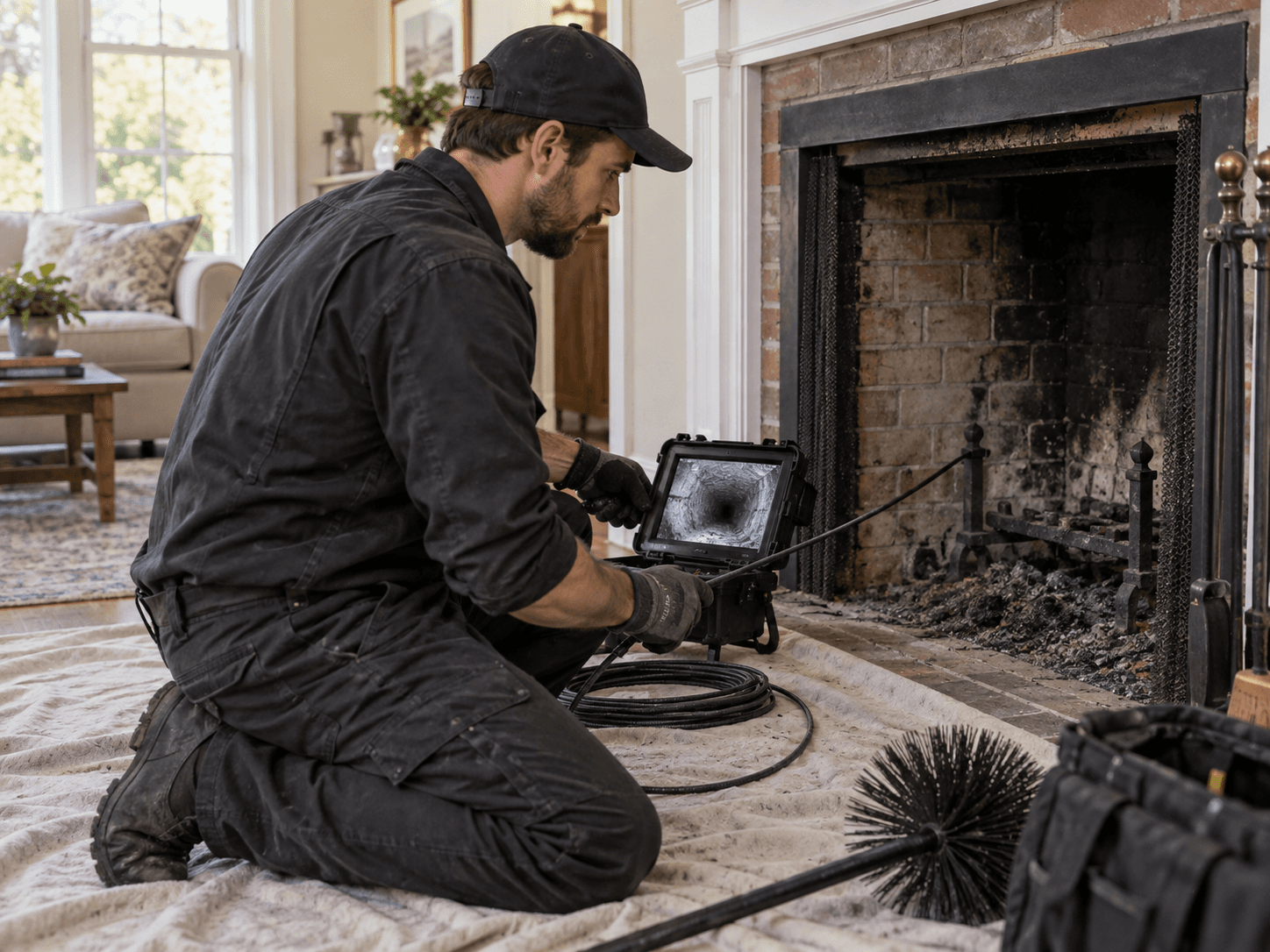
Solid-fuel systems can accumulate soot and creosote, and their inspection and cleaning needs depend on the appliance, fuel, use and flue condition. Ask which flue is swept, what deposits were found and whether the inspection is a separate scope.
02 · Appliance guide
Gas fireplaces and appliances
Gas appliances may use masonry chimneys, dedicated metal vents or direct-vent arrangements. Appliance service and vent inspection can require different expertise. Share the exact model and confirm whether the company handles the appliance, the vent, or both.
03 · Appliance guide
Pellet stoves
Pellet appliances have manufacturer-specific maintenance schedules, ash handling and vent components. Follow the manual and ask whether the contractor services the model, what vent sections are included and how service findings will be recorded.
04 · Appliance guide
One home can have several systems
Do not assume a single visit or flue covers every appliance. Ask for each appliance and vent to be named on the appointment and report. Confirm the professional's current qualifications and insurance for the work requested.
05 · Appliance guide
Use trusted instructions
The appliance manual and current fire-safety guidance take priority for operating instructions. If the system smokes indoors, shows damage or triggers an alarm, stop use and seek appropriate help rather than relying on a generic maintenance interval.
Keep the right safety boundary
This guide is general homeowner education. Standards, permit rules and manufacturer instructions change. Ask a qualified professional to assess the actual chimney, flue and appliance. For an active alarm, suspected fire or possible carbon-monoxide exposure, get outside and contact emergency services.
Read the CSIA homeowner resources or the CPSC carbon-monoxide guidance.